



Get Found Where It Matters: On Google

We help contractors and small businesses dominate local search with SEO, Google Ads, and high-converting websites.

Results That Speak Volumes

Numbers don’t lie. Here’s what we’ve achieved for our clients across the nation.

500+

GBPs Under Management

Google Business Profiles optimized and managed

100k+

Calls Generated

Phone calls driven to local businesses

$100M+

Revenue Generated

Total revenue generated for our clients

300%

Average Growth

Average increase in online visibility

Proof Over Promises

Real Local SEO results showing dramatic improvements in Google Business Profile visibility and rankings.

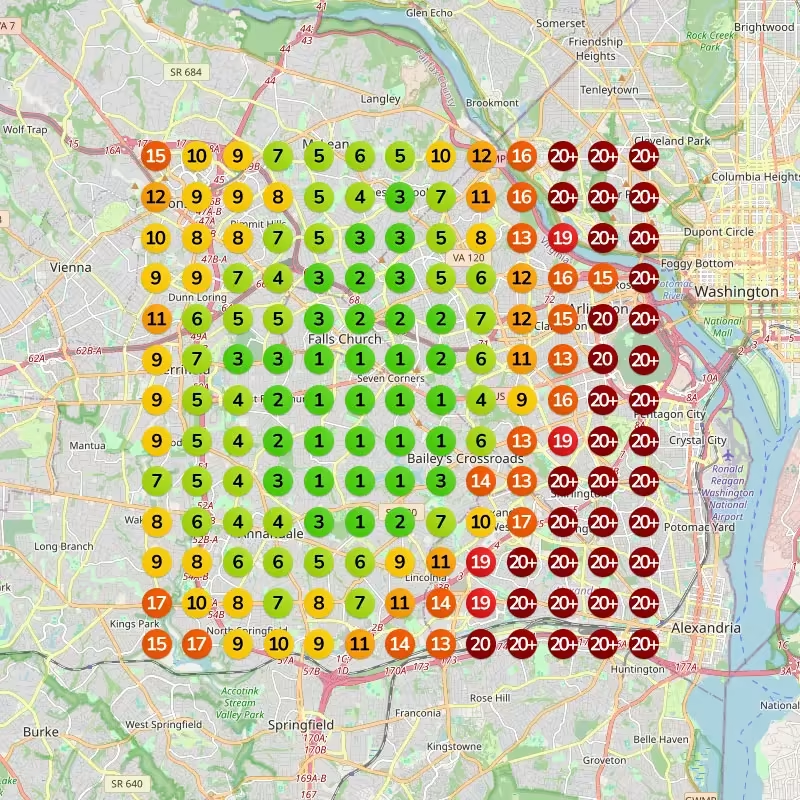
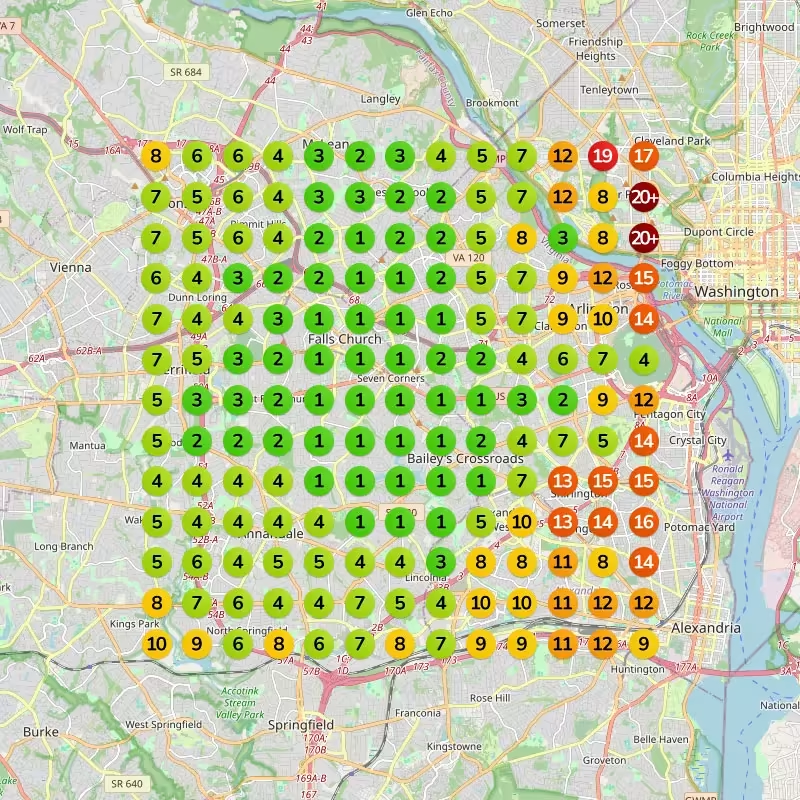
Local SEO Transformation

Dramatic visibility increase for “home remodeling” searches

Before

August - Poor Rankings

After

October - Dominating Results

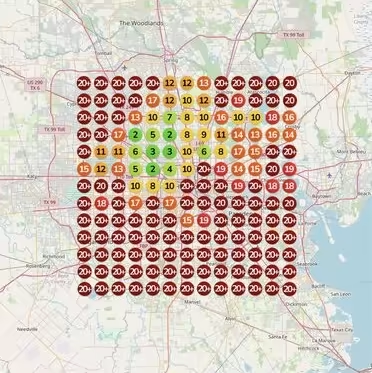
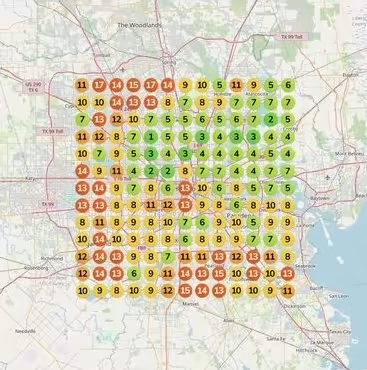
Google Business Profile Rankings

From scattered presence to top 3 rankings across service area

Before

October - Low Visibility

After

September - Market Leadership

Real Results. Real Clients.

See what business owners are saying about their transformation

4.9/5 Average Rating

Get a Free Local SEO Audit

We’ll send you a custom report showing how visible your business is on Google—and where you can improve.

Latest Digital Marketing Insights

Expert tips and strategies from our digital marketing specialists to help your business dominate local search results

Local SEO Tips for Small Businesses in 2026

Look, I get it. You’re running a business, not studying for a PhD in Google algorithms. But here’s the thing – if you’re not showing up when people search for your services locally, you might as well be invisible. And last time I checked, invisible businesses don’t pay the bills.

The good news? Local SEO doesn’t require a computer science degree or selling your soul to the SEO gods. It just needs some consistent effort and knowing where to focus your energy.

Your Google My Business Profile is Your New Best Friend

Think of your Google My Business (GMB) profile as your business’s dating profile, except instead of finding love, you’re finding customers. And just like dating profiles, half-completed ones get swiped left faster than you can say “it’s complicated.”

Here’s what you absolutely need to do:

  • Fill out EVERYTHING. Yes, even the boring stuff. Google rewards businesses that go the extra mile, not the ones that phone it in.
  • Add photos that don’t look like they were taken with a potato. Show off your storefront, your team, your work. People eat with their eyes first, and they shop with them too.
  • Post updates regularly. Think of it as Instagram for grown-ups who actually want to buy something.
  • Respond to reviews like your business depends on it (because it does). Even the cranky ones. Especially the cranky ones.

Keywords That Actually Matter

Here’s where most people go wrong – they optimize for what they think people search for, not what they actually search for. It’s like assuming everyone calls it “soda” when half your customers call it “pop.”

Focus on keywords that include your location:

  • “plumber near me” (because apparently we’ve all become too lazy to type full addresses)
  • “HVAC repair [your city]”
  • “best roofing contractor [your neighborhood]”

Pro tip: If you’re not sure what people are searching for, just ask them. Revolutionary concept, I know.

Citations: The Internet’s Way of Fact-Checking You

Citations are basically the internet’s way of making sure you’re not making up your business address. You need your Name, Address, and Phone number (NAP – yes, it’s an acronym because the internet loves acronyms) to be consistent everywhere online.

Think of it like this: If your business information is different on Yelp than it is on Yellow Pages, Google gets confused. And when Google gets confused, your rankings suffer. It’s like playing telephone, but with your business’s credibility.

Hit up these directories:

  • Yelp (obviously)
  • Yellow Pages (yes, it still exists)
  • Better Business Bureau
  • Any industry-specific directories

Want to see how this works in the real world? Check out our Locksmith SEO case study for a real example of citation consistency and local ranking growth.

Reviews: The Good, The Bad, and The “My Food Was Cold”

Reviews are like the modern version of word-of-mouth, except now Karen can tell the entire internet about her experience instead of just her book club.

Here’s how to handle them:

  • Ask for reviews. Don’t be shy about it. Happy customers are usually happy to help; they just need a gentle nudge.
  • Make it easy. Send them a direct link. The harder you make it, the less likely they’ll do it.
  • Respond to everything. Thank the good ones. Address the bad ones professionally (resist the urge to get snarky, no matter how tempting).

The Bottom Line

Local SEO isn’t rocket science, but it does require consistency. Think of it like going to the gym – doing it once won’t get you results, but doing it regularly will.

If all this sounds overwhelming, don’t worry. Our local SEO services are designed to handle the heavy lifting while you focus on what you do best – running your business. Because let’s be honest, you’d rather be serving customers than wrestling with Google algorithms, right?

And if you’re ready to take your digital marketing to the next level, consider pairing your local SEO efforts with targeted Google Ads campaigns to maximize your visibility and capture customers at every stage of their search journey. For inspiration, see our Garage Door SEO case study to learn how a local business achieved dramatic results.

Remember: Your customers are out there searching for you. The question is whether they’ll find you or your competition first.

Technical SEO Guide for Beginners: How to Build a Search-Friendly Website

Technical SEO might sound intimidating, but it’s really about making your website easy for Google (and your customers) to use. If you want to rank higher in search results, you need a solid technical foundation—no coding degree required!

What is Technical SEO?

Technical SEO covers all the behind-the-scenes stuff that helps search engines crawl, index, and understand your website. Think of it as the plumbing and wiring of your digital storefront.

Key Technical SEO Basics

  • Mobile-Friendly Design: Your site must look and work great on phones and tablets. Google uses mobile-first indexing, so if your mobile site is bad, your rankings will suffer.
  • Fast Loading Speed: Slow sites lose visitors and rankings. Compress images, use modern hosting, and minimize unnecessary scripts.
  • Secure (HTTPS): Google gives a ranking boost to secure sites. Make sure your site uses HTTPS, not just HTTP.
  • Clean URL Structure: Use short, readable URLs (like /services/local-seo, not /services?id=1234).
  • XML Sitemap: This is a roadmap for search engines. Most website platforms generate one automatically, but you can check yours at /sitemap.xml.
  • Robots.txt: This file tells search engines what to crawl (and what to ignore). Don’t accidentally block important pages!
  • Structured Data: Add schema markup to help Google understand your business, services, and reviews. This can improve your appearance in search results.

Common Technical SEO Mistakes (and How to Fix Them)

  • Broken links (404 errors): Regularly check for and fix broken pages.
  • Duplicate content: Make sure each page is unique and use canonical tags if needed.
  • Missing meta tags: Every page should have a unique title and meta description.
  • Large images: Compress images before uploading to keep your site fast.
  • Not using alt text: Add descriptive alt text to all images for accessibility and SEO.

How to Check Your Technical SEO

Why Technical SEO Matters for Local Businesses

If your site is slow, broken, or hard to use, customers will leave—and Google will notice. A technically sound website helps you rank higher, get more traffic, and convert more visitors into leads.

Need help? Our local SEO experts can audit your site and fix technical issues so you can focus on running your business.

Bottom line: Technical SEO is the foundation of your online presence. Get it right, and everything else gets easier!

Google Ads vs Facebook Ads: Which is Better for Local Businesses?

A comprehensive comparison of Google Ads and Facebook Ads to help you choose the right platform for your business.

Ah, the age-old question that keeps local business owners up at night (well, that and wondering if they locked the front door). Should you put your advertising dollars into Google Ads or Facebook Ads? It’s like choosing between pizza and tacos – they’re both great, but for different reasons.

Let me break this down for you without all the marketing jargon that makes your eyes glaze over.

Google Ads: The “I Need It Now” Platform

Google Ads is like being the guy with jumper cables when someone’s car won’t start. You’re there exactly when people need you most, with exactly what they’re looking for.

When someone types “emergency plumber near me” at 2 AM, they’re not browsing for fun. They’ve got water everywhere and they need help NOW. That’s Google Ads’ sweet spot.

Why Google Ads Rocks:

  • High-intent traffic: These people are ready to buy, not just window shopping
  • You show up instantly: No waiting 6 months for SEO to kick in
  • Local targeting that actually works: Show up for “plumber in [your city]” searches
  • You can literally have people call you with click-to-call buttons
  • ROI you can actually measure (shocking, I know)

Best for businesses that solve problems:

  • Service-based businesses (plumbers, electricians, lawyers)
  • Emergency services (because emergencies don’t wait for business hours)
  • High-value purchases (nobody impulse-buys a new roof)
  • B2B companies (because business people actually use Google for work stuff)

Facebook Ads: The “Let Me Tell You About…” Platform

Facebook Ads are like that friend who introduces you to new restaurants. You weren’t necessarily looking for a new place to eat, but now that they mention it, that pizza does look pretty good.

Facebook is where people go to see what their high school classmates are up to and accidentally discover they need your services.

Why Facebook Ads Are Cool:

  • Crazy detailed targeting: Want to target left-handed coffee drinkers in a 5-mile radius? Facebook’s got you covered
  • Visual storytelling: Show, don’t just tell
  • Community building: Turn customers into fans (and fans into walking billboards)
  • Cheaper clicks: Your budget goes further
  • Retargeting magic: Follow up with people who visited your website (not creepy, just smart marketing)

Best for businesses that create desire:

  • Restaurants and retail (because food pics and shopping are basically Facebook’s love language)
  • Event promotion (Facebook invented FOMO)
  • Brand awareness campaigns
  • Businesses with photogenic products or services

So… Which One Should You Choose?

Here’s the truth bomb: If you’re a local business with a limited budget, start with Google Ads.

Why? Because Google traffic converts better. Someone searching for “divorce lawyer near me” is probably going through a divorce, not just curious about legal procedures.

Once you’ve got a profitable Google Ads campaign running (and actually making you money), then you can expand to Facebook for broader awareness and to stay top-of-mind with potential customers.

The “Why Not Both?” Approach

The most successful local businesses we work with use both platforms strategically:

  • Google Ads for capturing immediate demand (the “I need this right now” crowd)
  • Facebook Ads for nurturing prospects and building brand awareness (the “I might need this someday” crowd)

Think of it like fishing with different bait for different types of fish.

The Real Talk

Look, both platforms can work. But they work differently, and you need to understand what you’re getting into. Google Ads are like a spotlight – intense and focused. Facebook Ads are like a warm campfire – they draw people in gradually.

If you’re feeling overwhelmed by all this (and honestly, who wouldn’t be?), our Google Ads management services take the guesswork out of the equation. We handle the complicated stuff so you can focus on running your business instead of becoming a part-time advertising expert.

The bottom line? Start where your customers are actively looking for you. That’s usually Google. Everything else is just bonus points.